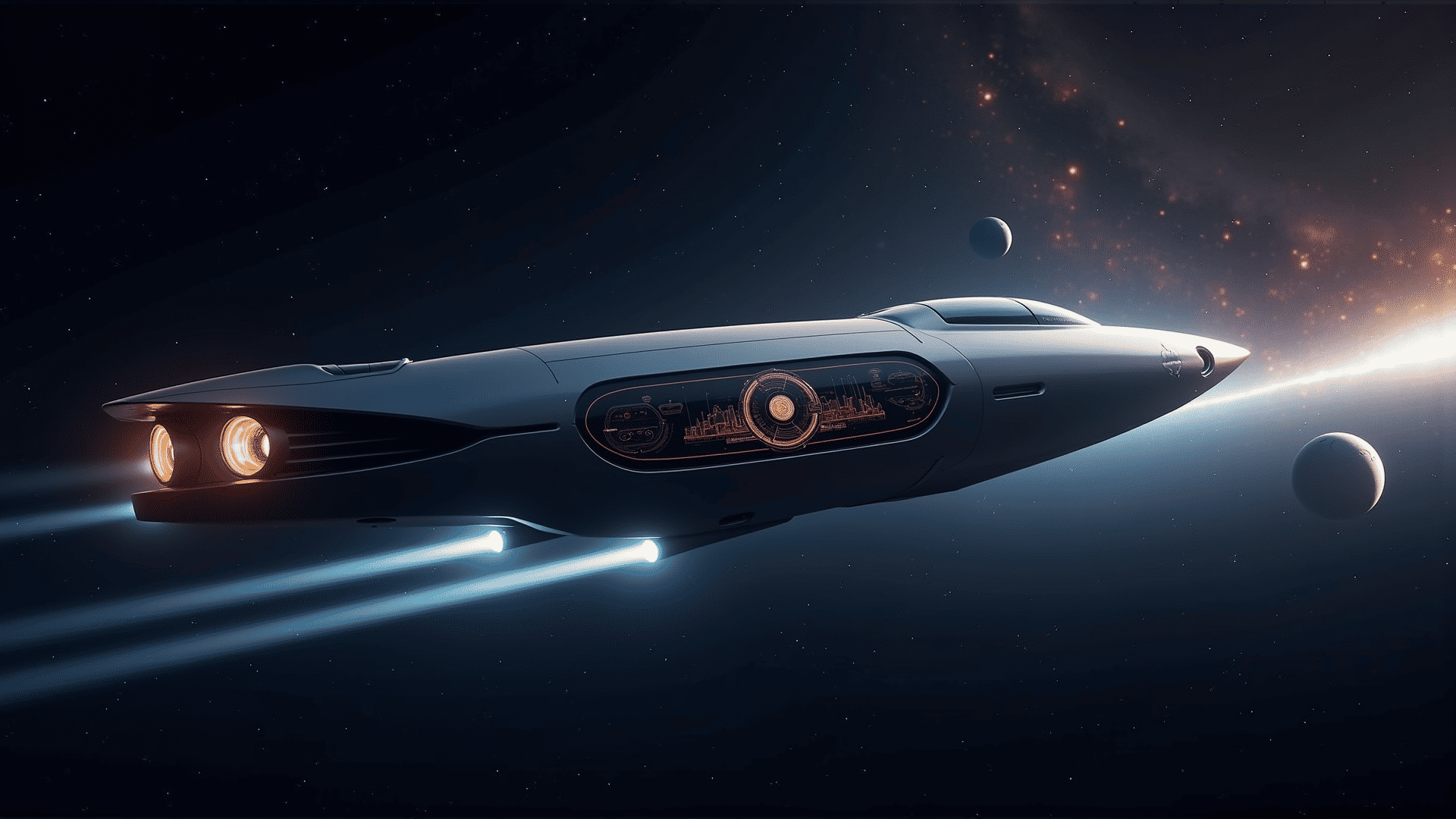
As humanity sets its sights on the stars, artificial intelligence (AI) emerges as a vital ally, transforming the scope and efficiency of space exploration. With space missions becoming increasingly complex and data-centric, AI-powered systems are helping to overcome the limitations of traditional methodologies, ushering in a new era of discovery and innovation.
One of the most significant contributions of AI to space exploration is in navigation and pathfinding. Deep learning algorithms, capable of processing vast amounts of data in real-time, enhance a spacecraft's ability to autonomously navigate through the cosmos. This capability is particularly crucial during missions to distant planetary bodies, where communication delays with Earth can hinder responsiveness. By autonomously adjusting flight paths and making split-second navigational decisions, AI systems help avoid obstacles and ensure mission success.
In addition to navigation, AI is revolutionizing the way we analyze the data gathered from space. The vast volumes of information transmitted by satellites and probes often exceed what human analysts can efficiently process. AI algorithms can sift through this data more swiftly and accurately, identifying patterns and anomalies that might otherwise go unnoticed. For instance, machine learning models are being used to detect potential signs of life or unusual geological formations on distant planets, providing scientists with targeted insights that inform future exploratory missions.
The operational efficiency of space missions is also seeing remarkable improvements, thanks to AI. Autonomous drones and robotic systems, integrated with AI-driven decision-making capabilities, are deployed on Mars and other celestial bodies to conduct scientific research and perform maintenance tasks. These systems can adapt to unexpected challenges, such as harsh weather conditions or mechanical failures, ensuring uninterrupted mission activity and allowing human astronauts to focus on more complex scientific objectives.
NASA's Mars rovers exemplify the success of AI-driven machines in space exploration. The Perseverance rover, for example, uses AI to autonomously select significant rock and soil targets to study, optimizing its scientific output. Moreover, the Ingenuity helicopter, a companion to Perseverance, employs AI to maintain stability and orientation during flight, a crucial factor for operations in Mars' thin atmosphere.
Meanwhile, AI's role in space is not limited to planetary missions. It is also instrumental in the management and design of space stations and satellites. Predictive maintenance algorithms are employed to forecast equipment failures before they occur, reducing the need for costly and potentially dangerous repairs. Furthermore, AI is used in optimizing satellite constellations, ensuring that communication networks remain robust and efficient.
The integration of AI also extends to fostering international collaboration. As space missions become more ambitious, they frequently involve multiple countries and agencies. AI can facilitate this collaboration by harmonizing data processes, offering a universal language through which disparate systems and teams can operate seamlessly.
In the coming years, the burgeoning space industry will likely witness further AI-driven advancements. Concepts such as AI cityscapes on the Moon or Mars, where AI manages resources and infrastructure, or AI-designed spacecraft optimized for specific missions, hold immense promise.
Ultimately, AI serves as both a tool and a catalyst, pushing the boundaries of what humanity can achieve in space. As researchers and engineers continue to harness its potentials, artificial intelligence will undoubtedly play a central role in propelling space exploration to new heights, transforming our understanding of the universe and our place within it.